
Tampon Safety Tips
No matter what kind of tampons you use (be it organic, natural, or conventional) it is important to be made aware of the risks associated with tampon usage. To ensure your safety, please pay close attention to the following pre-cautions:
As you may be aware, tampons have been associated with Toxic Shock Syndrome (TSS). According to the FDA, TSS is a rare but potentially fatal disease caused by a bacterial toxin (different bacterial toxins may cause TSS, depending on the situation, but most often streptococci and staphylococci are responsible). The number of reported TSS cases has decreased significantly in recent years. Approximately half the cases of TSS reported today are associated with tampon use during menstruation, usually in young women.
TSS also occurs in children, men, and non-menstruating women. In 1997, only five confirmed menstrual-related TSS cases were reported, compared with 814 cases in 1980 (according to data from the Centers for Disease Control and Prevention “CDC”). Although scientists have recognized an association between TSS and tampon use, the exact connection remains unclear. Research conducted by the CDC suggested that use of some high absorbency tampons increased the risk of TSS in menstruating women. A few specific tampon designs and high absorbency tampon materials were also found to have some association with increased risk of TSS. These products and materials are no longer used in tampons sold in the US market.
One way to help prevent TSS is to use adequate levels of absorbency depending on your period’s flow. To help women compare absorbency from brand to brand, FDA requires that manufacturers measure absorbency using a standard method and describe absorbency on the package using standardized terms. Thus, the terms "Junior”, "Regular”, "Super”, "super plus” and “Ultra” always describe a specific range of tampon absorbency regardless of the brand.
Understanding Absorbency:- Junior/Mini Less than 6 Grams Fluid Absorption (Recommended for Very Light Flow Days)
- Regular 6 - 9 Grams Fluid Absorption (Recommended for Light Flow Days)
- Super 9 - 12 Grams Fluid Absorption (Recommended for Medium Flow Days)
- Super Plus 12 - 15 Grams Fluid Absorption (Recommended for Heavy Flow Days)
- Ultra 15 - 18 Grams Fluid Absorption (Recommended for Very Heavy Flow Days)
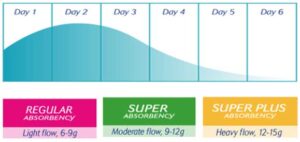
According to the American College of Obstetricians and Gynecologists, your tampon is probably too absorbent:
- If the tampon is hard to remove,
- If you experience vaginal dryness,
- If a tampon shreds inside the Vagina,
- If it doesn't need to be changed after several hours
The National Research Center for Women and Families notes, TSS symptoms are flu-like in nature, and they appear quickly and are often severe. Not all cases are exactly alike; you may not have all of the symptoms.
Remove your tampon and Seek Medical Help Immediately, if you experience the following symptoms during menstruation:- Sudden high fever – 102oF (38.9oC) or higher
- Vomiting
- Diarrhea
- Muscle aches
- Dizziness, fainting, or near fainting when standing up
- A rash that looks like a sunburn
- Wash Hands with soap and water before Inserting or Removing a Tampon.
- Follow package Directions for Insertion.
- Choose the Lowest Absorbency for your flow.
- If your tampon is hard to pull out or shreds when removed, your tampon is too Absorbent and you should use one with a Lower Absorbency.
- Change your tampon at least every 4-8 hours, especially during heavy flow days.
- Consider Switching between Sanitary Pads and Tampons.
- Be aware of the warning signs of Toxic Shock Syndrome.
- Do not use tampons Between periods or normal days.